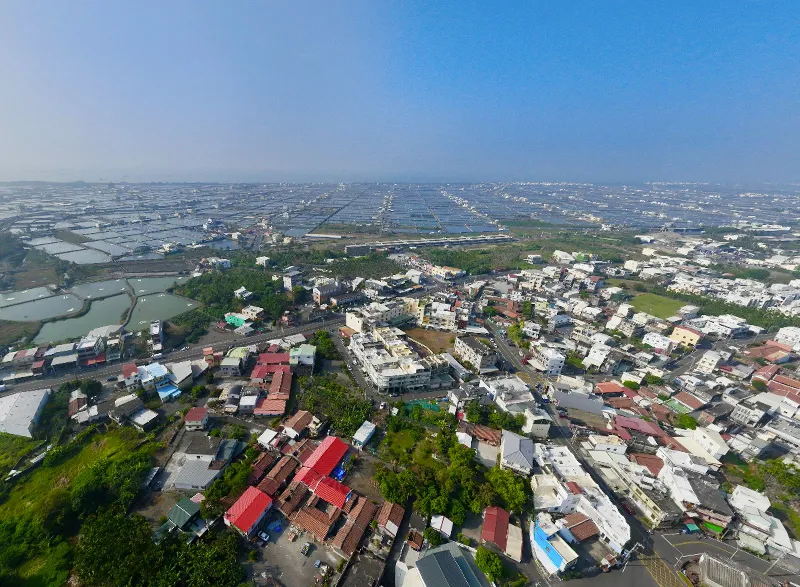
 Pingtung Jiadong
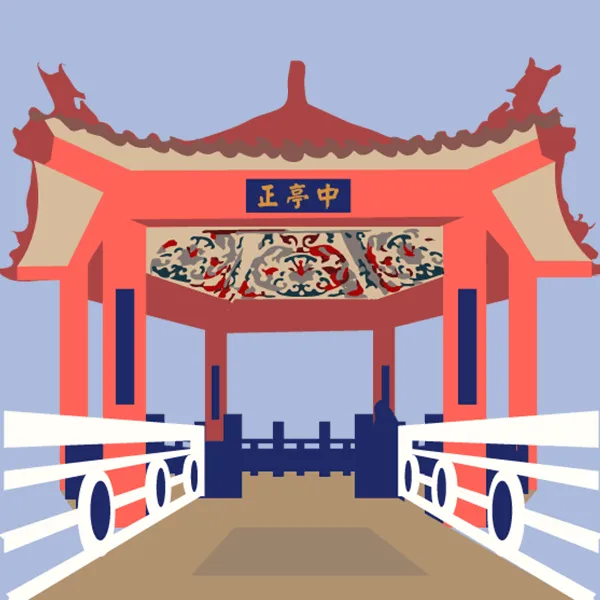
 Poet’s Walk
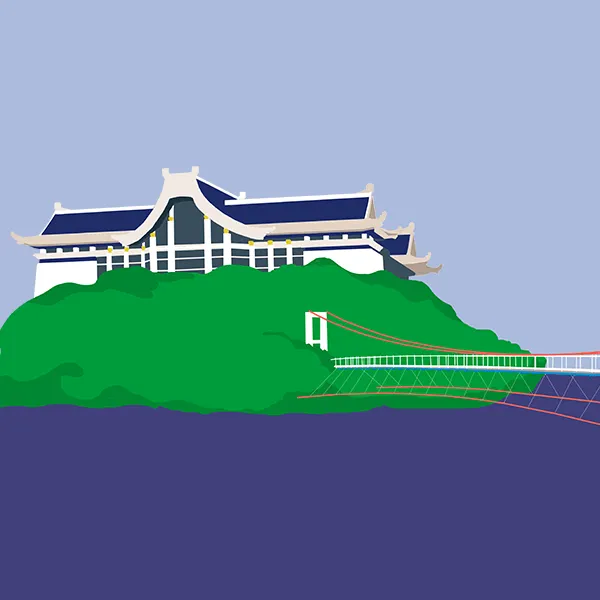
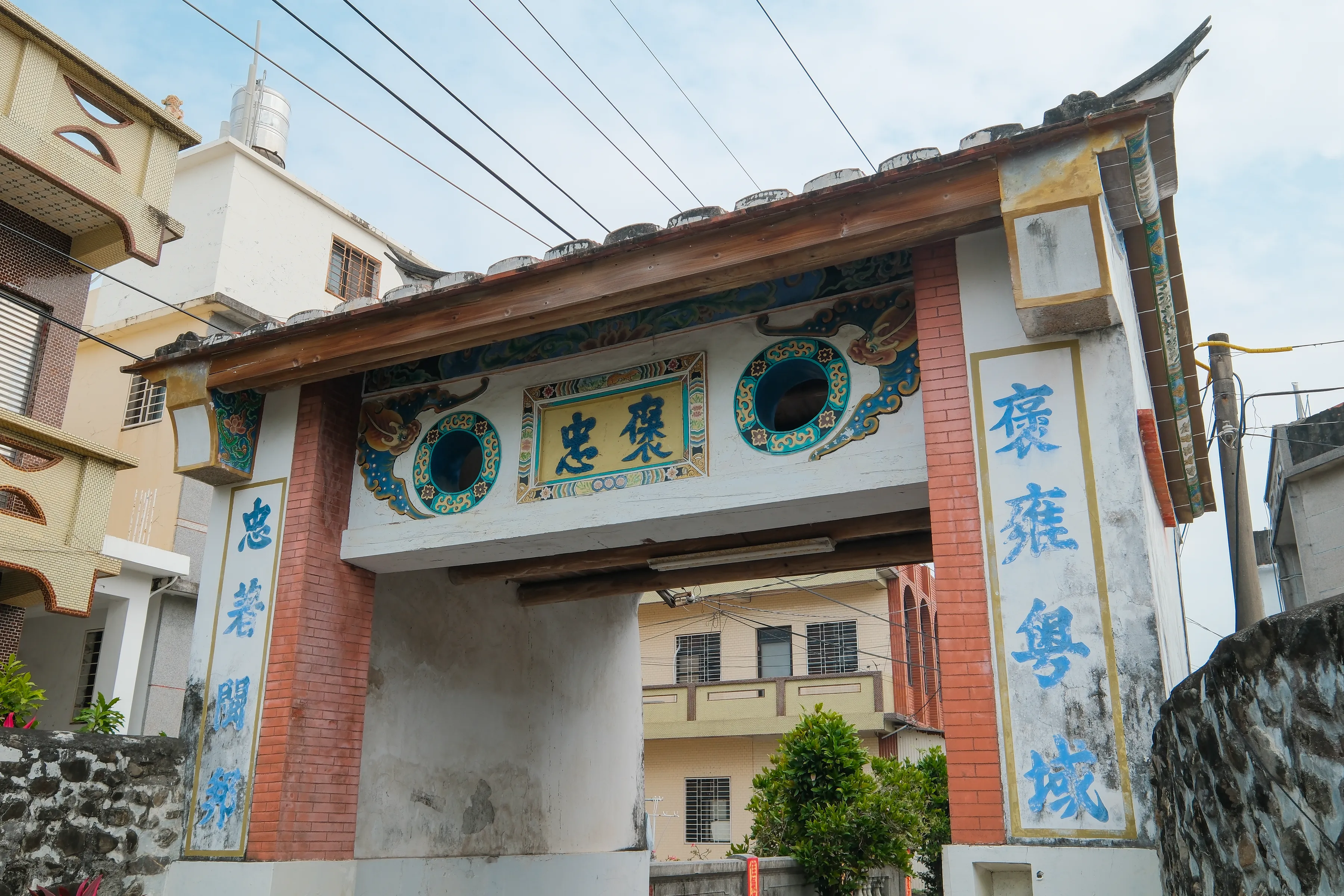 West Gate
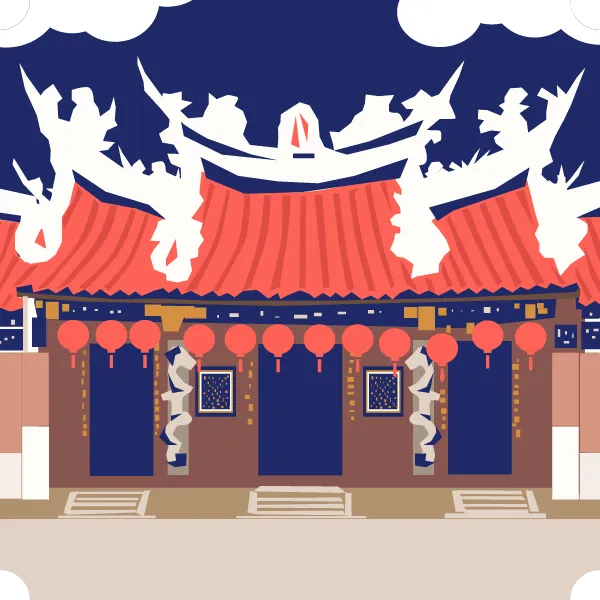
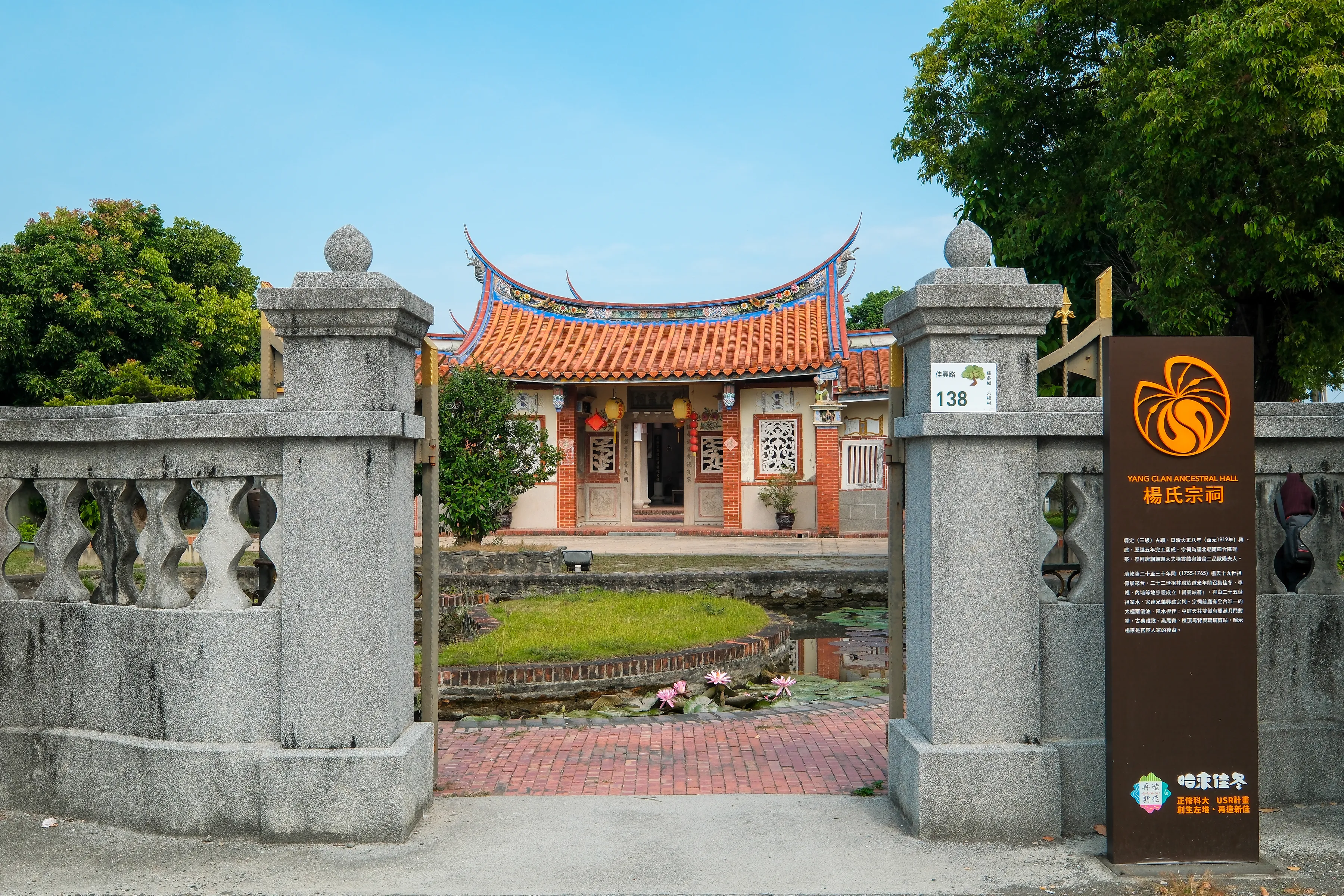 Yang Clan Ancestral Hall
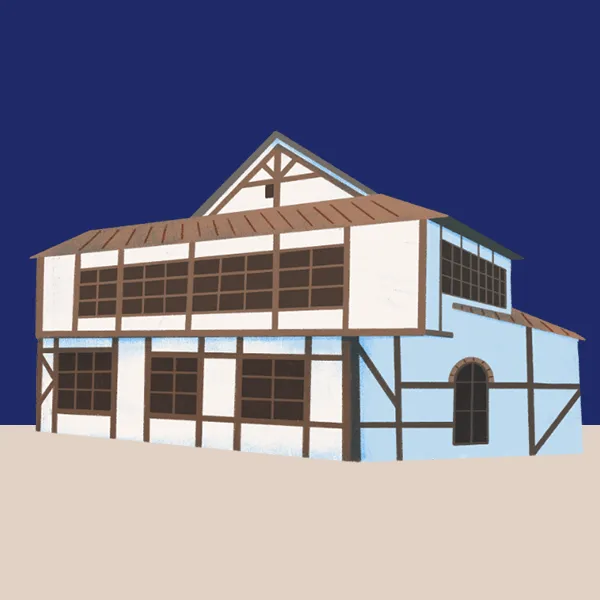
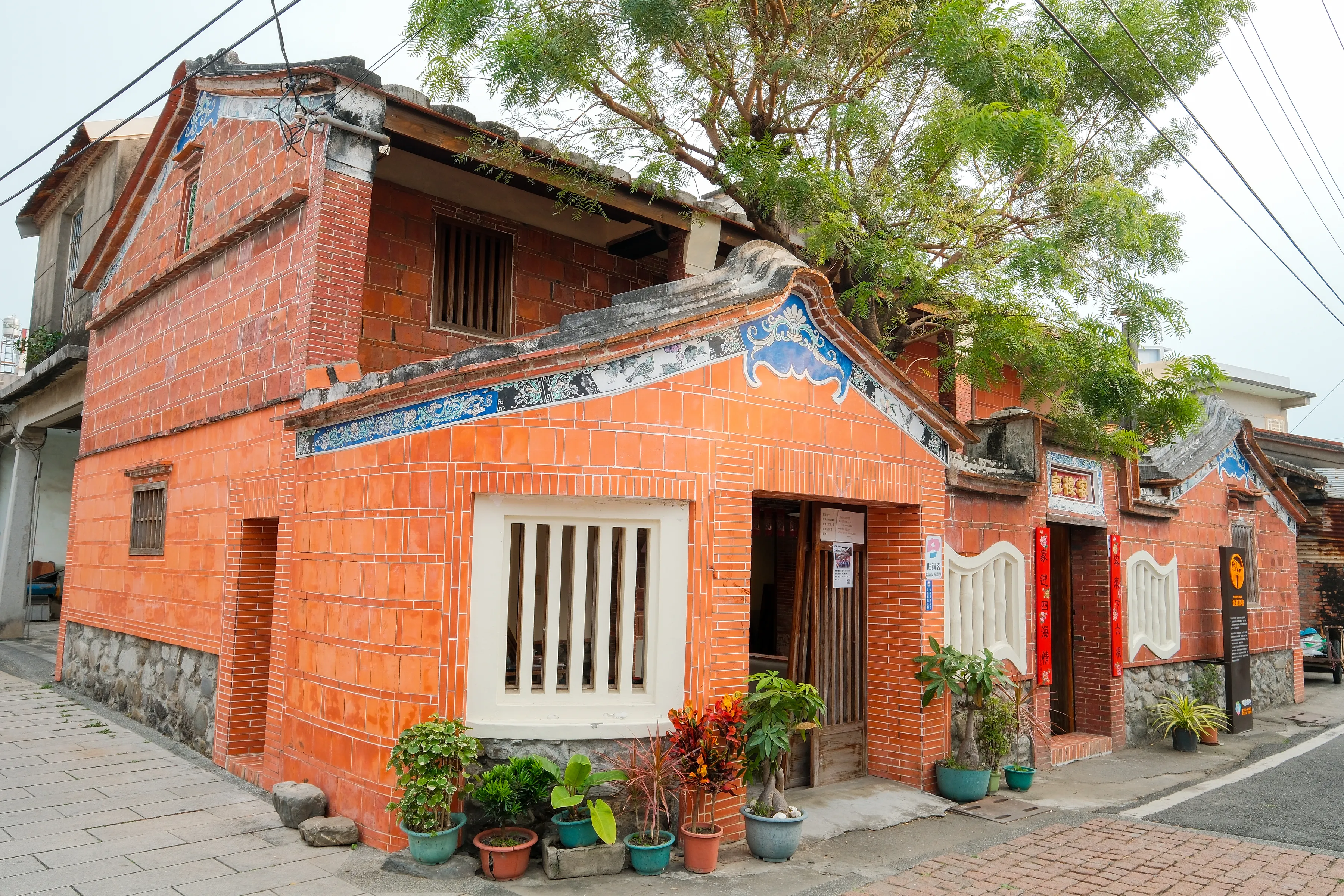 Zhang Family Commercial Building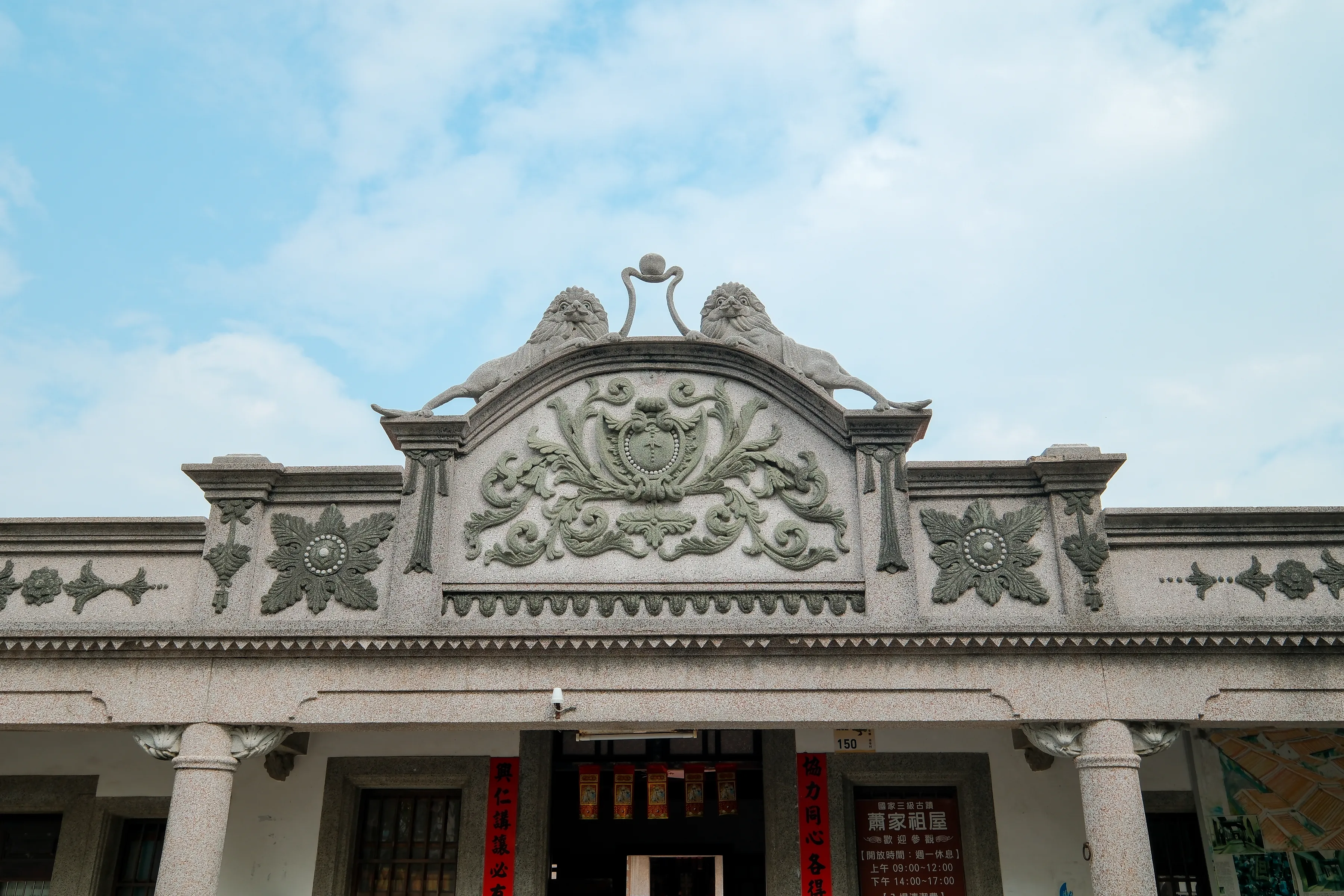
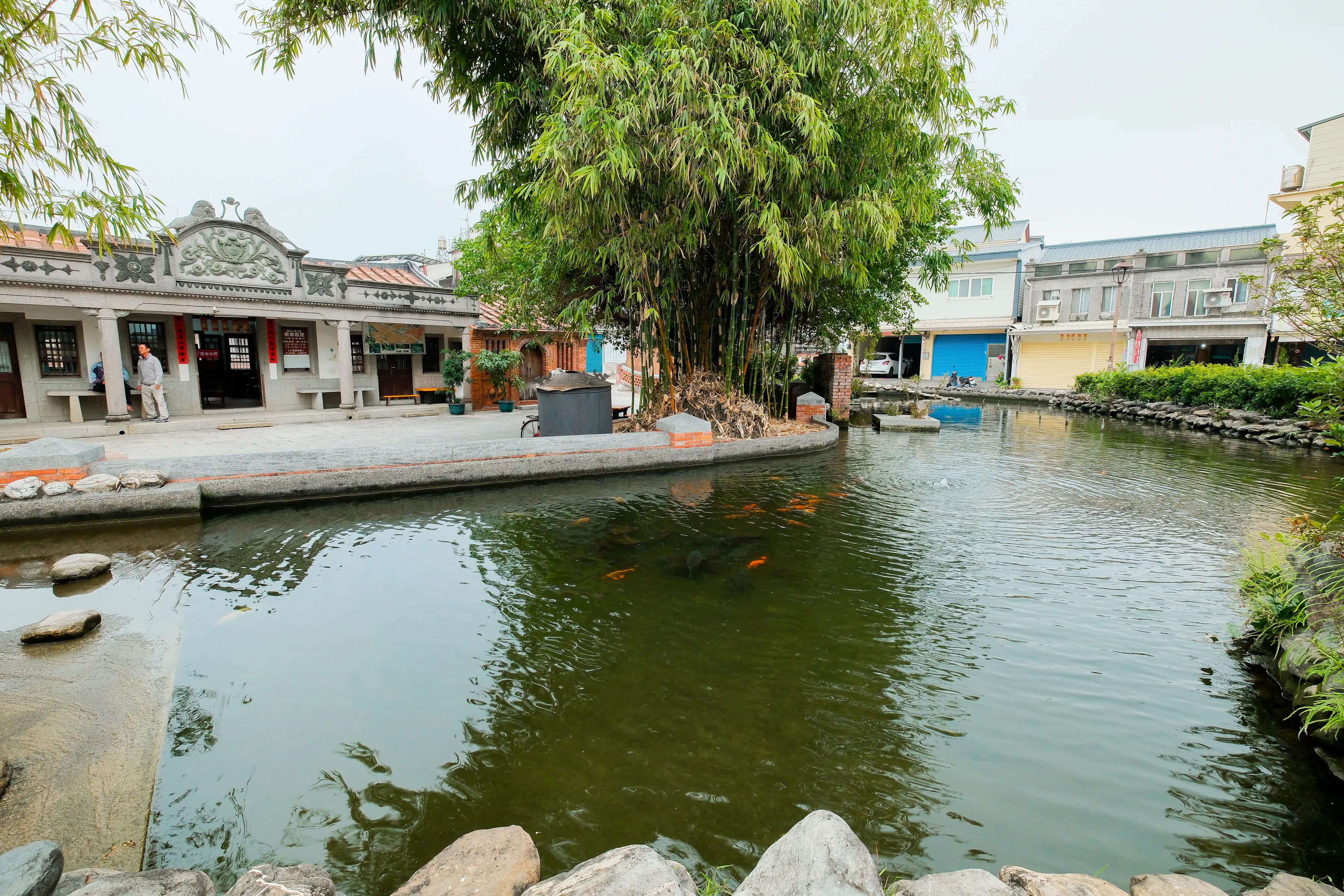
Before entering the residence, the first feature that comes into view is a large crescent-shaped pond. During the Qing Dynasty, it served not only as an important defense against bandits, but also provided functions for fire prevention, daily water use, and aquaculture. In Feng Shui, flowing water symbolizes the gathering of wealth and an unending cycle of vitality, reflecting Hakka ancestors' wisdom in meticulous spatial and environmental planning.
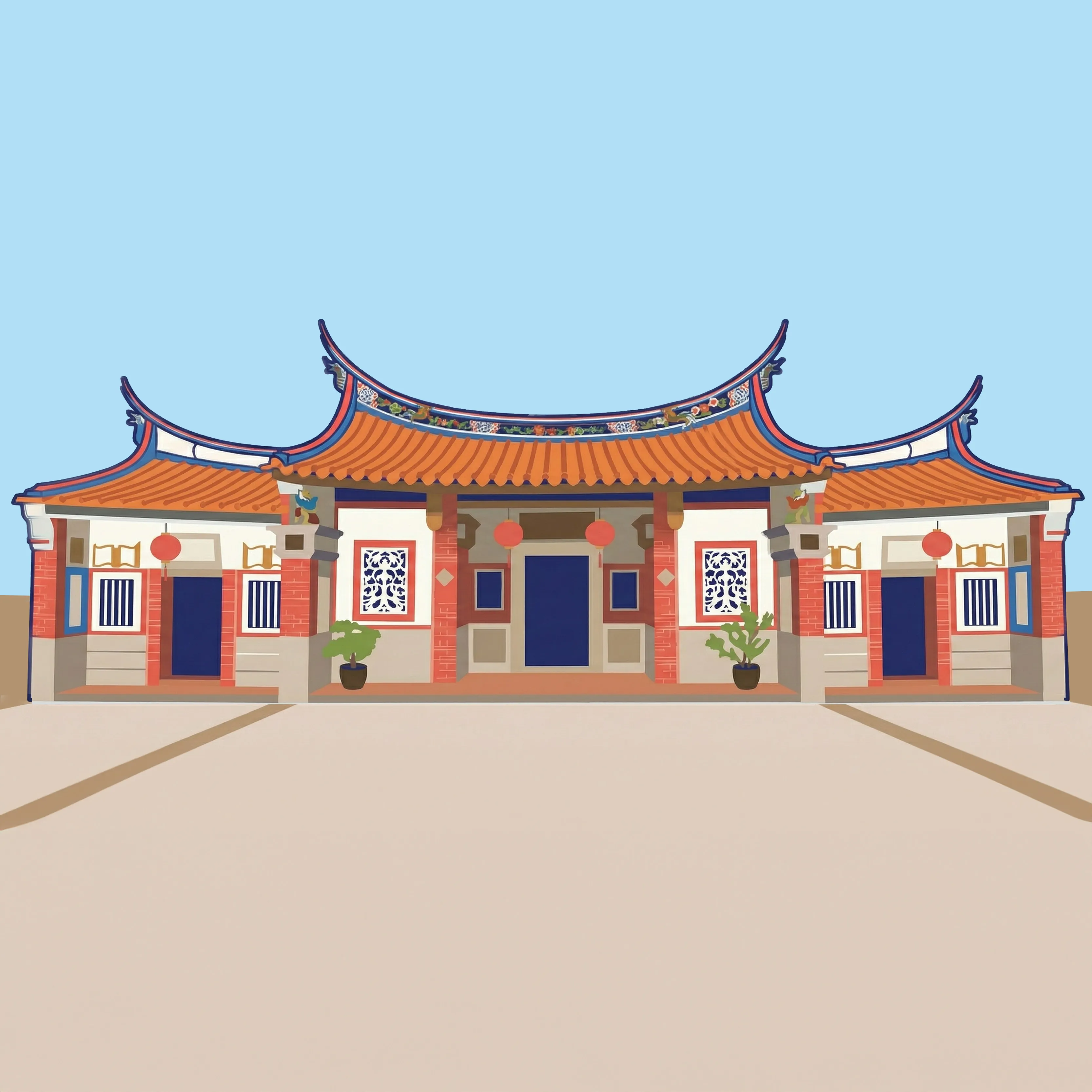
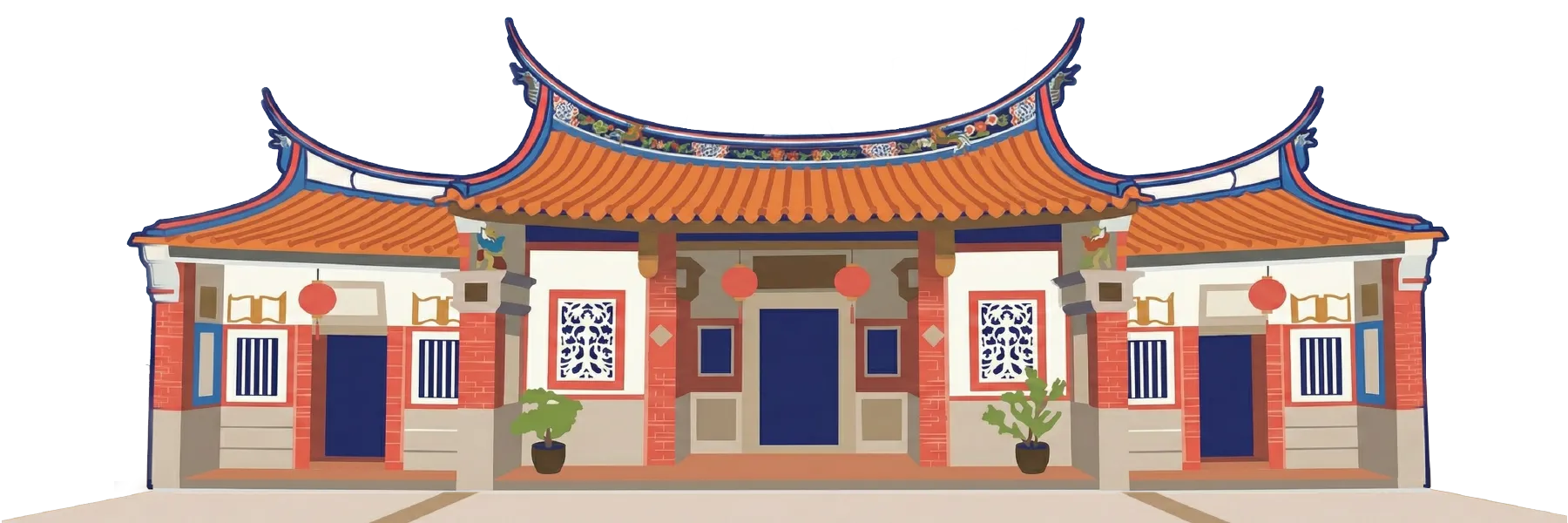
Built in 1875, the First Hall is the most ornate façade of the entire historic residence. The frontage was rebuilt during the Japanese colonial period after storm damage and incorporates Baroque elements popular at the time. Notable features include the finely crafted “double lions playing with a ball” gable and medal-like scroll motifs that, combined with traditional red brick, create a distinctive blend of Eastern and Western aesthetics. Once used as a reception space for guests, the hall now serves as the starting point for guided tours. Inside, a miniature model of the residence handcrafted by Mr. Xiao Yihsiung is on display, allowing visitors to view the overall layout of the historic complex from above.